


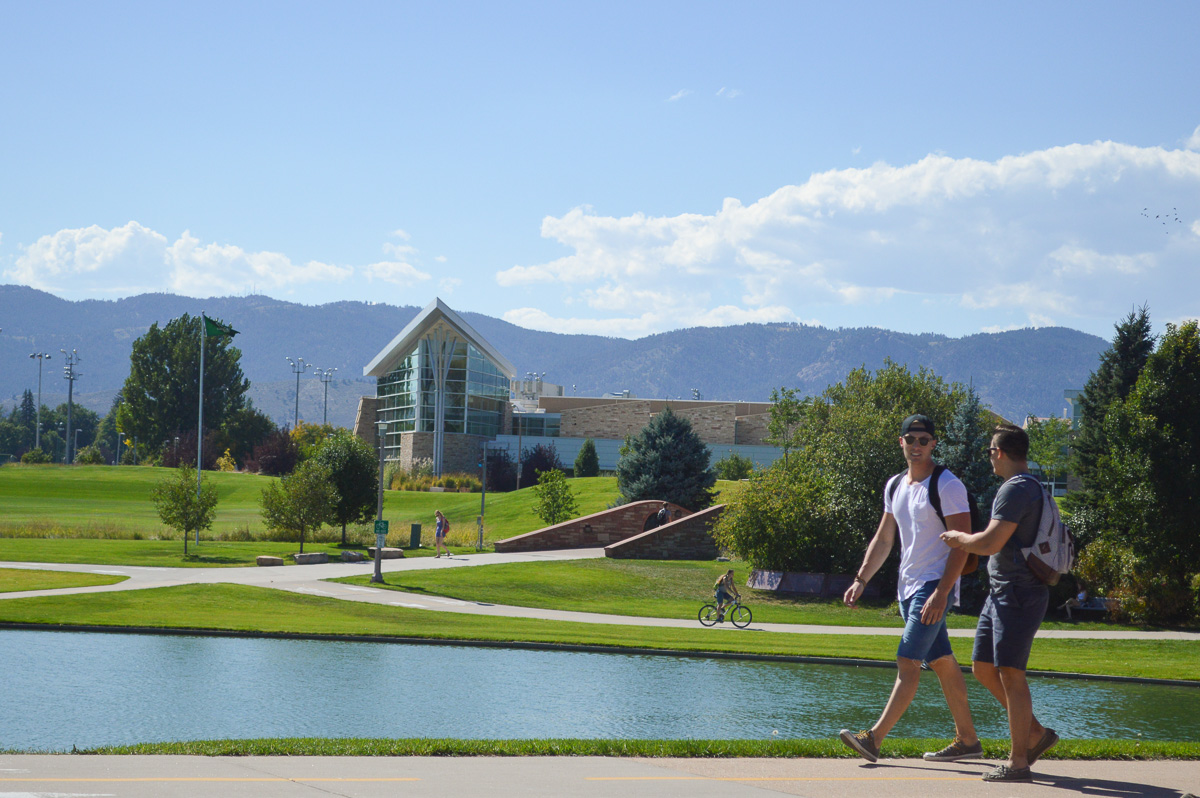
WELCOME TO COLORADO STATE UNIVERSITY
SCHOLAR Pre-Arrival Checklist
Welcome to Colorado State University! This pre-arrival guide is designed to help you prepare for the exciting journey ahead. Click through each item below to review important information and the steps required to complete each pre-arrival task. Review this page carefully and be ready to reference it often as you prepare to transition to the U.S., Colorado, Fort Collins, and CSU!
This pre-arrival checklist is for scholars; incoming students should review our student pre-arrival guide.
Step one:
Prepare Essential Documents
For every immigration document you receive, check that the spelling of your name and your date of birth
are exactly the same as listed on your passport. Copy all documents prior to departure. Carry all originals with you when you travel, and keep copies in a separate place.
1. Make sure your passport is valid for at least six months beyond your intended entry date into the U.S.
2. Request a DS-2019
If you will be joining CSU as a J-1 Scholar you will need to work with your CSU department to complete the Exchange Visitor DS-2019 Initial Request forms. Once complete, you will
submit your required documents to International Student and Scholar Services at [email protected]
3. Receive your DS-2019 and complete orientation
When your immigration documents are ready, you will receive an email with your DS-2019, a link to the J-1 Scholar Orientation, and other helpful resources. Read the resources and complete the orientation, then print and sign the DS-2019 form. You will be required to submit this document when you apply for a visa at a U.S. Embassy or Consulate.
4. Pay the SEVIS I-901 fee
At least two weeks before your visa interview, pay this fee online. Type your name exactly as it appears on the DS‑2019 form. Print a copy of the online receipt and bring it to your visa interview. (Canadians should present this receipt at the U.S. border or port of entry) Make copies of this receipt and keep it with your other immigration documents.
**Canadian citizens do not need to apply for a visa and are not required to complete steps 5-9.
5. Complete the DS-160 form
The DS-160 form is a non-immigrant electronic visa application, available on your local U.S. Embassy/Consulate website.
– Accuracy is imperative, so complete it yourself
– Check your answers (once you submit, you cannot edit it or even review your answers)
– Print your responses before submitting so you can refer back to them
– You cannot withdraw after submission, but a new one can be submitted
6. Pay Visa Application Fee
Follow the instructions on your local U.S. Embassy/Consulate website to pay this fee.
7. Schedule a visa application interview at a U.S. embassy or consulate
Find your local U.S. Embassy or Consulate and schedule an appointment with them as early as possible. The wait time for a visa interview varies, but is always longer during the months of June, July, and August. Depending on your field of research and nationality, the visa officer may also have to get special clearances, which can require additional time.
8. Visa Delays
If you are unable to obtain a visa prior to the program start date, email [email protected] immediately so that we can update your DS-2019.
9. Home Country Physical Presence Requirement
If you are subject to the Two-Year Home Country Physical Presence Requirement, or 212(e), the Consular Officer will indicate this condition on your DS-2019 and/or visa. If you are subject to this requirement, it means that upon completion of your J-1 program, you will be required to return to your home country and must be physically present there for an aggregate of two years before you will be eligible to return to the U.S in immigrant, H or L status. You could be subject to this requirement if you are admitted to the U.S. under one of the following conditions:
– Your J-1 program is being funded by your home government or the U.S. government;
– You have specialized knowledge or skills that are deemed necessary for the development of your home country as listed in the Exchange Visitor Skills List; or
– You are receiving graduate medical education or training in the United States
If you are subject to this requirement, you (and your dependents) will be ineligible to change your immigration status within the U.S. but you may leave and re-enter in a new non-immigrant status before you have fulfilled the requirement. Please see page 2 of your DS‑2019 for important program rules.
More helpful information on applying for a U.S. visa
Prepare For Your Visa Interview
Prepare for your visa interview
Remember to remain calm and answer all the visa officer’s questions openly and honestly. Bring the following to your appointment:
– Passport valid for at least six months
– DS-2019 form (signed/dated)
– CSU offer letter (if applicable)
– Completed visa application forms (printed DS-160 confirmation notice)
– Two 2” x 2” photographs in the required format
– A receipt of the paid SEVIS I-901 fee
– Financial evidence of sufficient funds to cover living expenses during your program
– Any information that proves that you will return to your home country after finishing your program in the U.S. This may include proof of property, family, or other ties to your community.
Social Media
– All social media accounts must be provided on the DS-160 and set to public (this includes Flickr, LinkedIn, YouTube, Reddit, blogs, etc. – including anything that could possibly be considered, even accounts that are not actively being used or have never been used)
– If you realize you forgot to list one of your accounts, submit a new DS-160 – most consulates will allow applicants to re-submit their DS-160 once prior to the visa interview as long as it is at least 3 – 5 days before the interview takes place
– There is no DS-160 fee; the $185 fee is for the visa interview. Therefore, submitting a new DS-160 does not cost money.
Online Presence Review
A new step between the visa interview and visa issuance in which consular officers are required to look for the following on your social media/online presence:
– Support for a designated foreign terrorist organization
– Evidence of illegal activities
– Hostile attitude toward U.S. citizens and/or the U.S. government and/or U.S. culture (this includes posts that you are tagged in) If you are uncomfortable with something being put on the front page of the national newspaper, you should be concerned
– Antisemitic views
– Previous visa violations (e.g. unauthorized employment) For example, a photo of applicant working in a restaurant during the time they had previous F-1 status could lead visa officer to conclude they were working without authorization, even if it was outside the U.S.
– Inconsistencies from DS-160/visa interview. For example, if the consular officer asks, “What dates did you work here” and the verbal answer is different from what was written on the DS-160 or what is on their LinkedIn page, it could result in a refusal. Accuracy and transparency are crucial
Things to Note
Visa officers are trained to assume anything on paper is false, and applicants are being evaluated based on dialogue (that is the whole point of the visa interview). The default is that the applicant does not have ties to the home country unless they demonstrate they do. Scholars need to volunteer what makes them qualify for the visa; the “why” is more important than the “what.”
– Why are you pursuing this research at CSU?
– Why this makes a difference and why it is important to you
– What you plan to do on the weekends and with free time
– What will you miss about home?
Red Flags
– Unlisted social media accounts or discrepancies
– If you do not have any social media accounts, volunteer why not
– If you have more than one account on the same platform, volunteer why
– Avoid vague or scripted answers, or only answering “yes” or “no”
– If you have family members in the U.S., answer “yes” even if it is a distant relative you don’t know (then explain the relationship)
Activate Your NetID
1. Activate your NetID
Your first step to become part of the CSU community is to activate your NetID. Make sure to have your CSUID number, which you can obtain from your CSU department or International Student and Scholar Services. Creating an NetID will also create your @colostate.edu email address. Be sure to check this email account regularly (or forward it to your preferred email), as all important CSU-related communication will be sent to this address.
Enroll in Duo Two-Factor Authentication and Activate your CSU Email
1. Enroll in Duo Two-Factor Authentication
Once you have your NetID, your next step is to enroll in Duo. Duo is a tool that provides two-factor authentication to better protect your account by requiring an additional piece of information beyond your username and password. When you access certain CSU online services (e.g. Microsoft 365, Teams, email, etc.), you will be required to use a device that you have to provide an additional layer of security to your account.
Need help enrolling in Duo?
CSU Information Technology Support Helpdesk
Phone: (970) 491-7276
Email: [email protected]
2. Activate your CSU Email
After you activate your NetID, you should also establish your university email account (using Office 365). Your email address is formatted with your first name and last name, followed by @colostate.edu. For example: [email protected]. This is referred to as your “alias” and is the public address you supply when someone wants to email you. Your CSU email account stays with you throughout your CSU experience.
To log in to your CSU email account:
1. Go to the Office365 login page
2. In the sign-in box, enter your NetID as the username in the format [email protected]
3. Enter your NetID password
4. Once logged in, click on “Outlook”
Note: there might be a delay of up to two hours between when you create your NetID and when your email account is ready to use.
Secure Housing
Plan your housing immediately after you decide to come to CSU. Secure your housing plans well in advance of departing for the U.S. On and off-campus space fills quickly.
——-
On-Campus Housing
Scholars are not guaranteed on-campus housing, and it is not meant to be long term. You may apply if you wish to live on campus for a short program (less than a year) or at the beginning of a longer program while you look for permanent housing.
Apartments: CSU offers both single and family apartments. Furnished apartments as well as short term leases are sometimes available. Visit CSU’s housing and dining website for more information about on-campus housing options.
——-
Off-Campus Housing
Off-campus housing is another option available for scholars. Due to limited on-campus housing availability, scholars who will be at CSU for a year or more should plan to live off-campus, even if an on-campus housing assignment has been made initially. CSU’s Off-Campus Life office has many great resources for scholars looking for housing.
Finding furnished apartments off-campus is rare. Plan to pay your first and last month’s rent before you move in plus a deposit. Most apartment owners require a one-year lease.
——-
Family Housing
As with all on-campus housing, family housing availability is limited. You may apply if you wish to live on campus with your family for a short program (less than a year) or at the beginning of a longer program while you look for permanent family housing. On-campus family housing options include Aggie Family and University Village.
——-
Temporary Housing
Scholars are responsible for making their own housing arrangements and should do so before arriving in Fort Collins. If you arrive before your arranged move-in date, you will need to make temporary arrangements at a nearby hotel or hostel.
Step TWO:
Get Your Finances in Order
1. Bring enough accessible money for your initial living expenses
Bring enough money to cover your expenses during your first few days in the U.S., such as food,
transportation, personal items, and temporary housing. These expenses can be covered with major
credit, debit, and ATM cards. We don’t recommend carrying more than $1,000 in cash. You
can set up a checking account at a local bank once you arrive, and wire money electronically as needed. Calculate the estimated expenses of your program to plan ahead.
2. Prepare for banking in the U.S.
Cash: Cash is accepted at most locations. Common paper bill amounts are: $1, $5, $10, $20, $50, and $100. One dollar ($1) is equal to 100 cents. Common coins include: Penny (1 cent), Nickel (5 cents) Dime (10 cents), Quarter (25 cents).
Credit/Bank Cards: In the United States, the most widely accepted bank and credit cards are Visa and MasterCard. Bank cards can either be debit, which pulls funds directly from your bank account, or credit, which you pay off at the end of each month. Apply for a credit card in your home country before you travel since it may be difficult to get one after you leave.
Bank Accounts: It is not recommended to regularly carry large amounts of cash with you, so once you arrive, you may wish to open a bank account. There are two banks on campus, located inside the Lory Student Center: Canvas Credit Union and First National Bank of Omaha. To open an account, you will need your U.S. mailing address, money to deposit, and two pieces of photo identification (1. your passport and 2. your RamCard – which you can get as soon as you arrive on campus).
Transferring Money: Before you leave your country, you need to know your government’s regulations and your home bank’s procedures for transferring money to the United States. Consider your living situation and lifestyle to plan ahead.
Complete Health Tasks
1. Bring your immunization record with you
It is recommended that all international scholars bring their immunization record to campus.
2. Review J-1 health insurance requirements
Review the J-1 health insurance requirements prior to arrival.
3. Fulfill the health insurance requirement
Federal regulations require all J-1 Exchange Visitors and their J-2 dependents to maintain comprehensive medical insurance meeting specific minimum requirements from the start date of the J-1 program (indicated in item 3 of the DS-2019) and continuing to the end of the J-1 program. Coverage must continue without breaks or lapses even if the exchange visitor travels outside the U.S. for an extended period of time during the J-1 program.
22C.F.R. 62.14 describes exchange visitor health insurance requirements as follows:
– Medical benefits of at least $100,000 per person per accident or illness;
– Repatriation of remains in the amount of $25,000;
– Expenses associated with the medical evacuation of exchange visitors to their home country in the amount of $50,000;
– Deductible not to exceed $500 per accident or illness
Insurance policies secured to fulfill the requirements:
– May require a waiting period for pre-existing conditions that is reasonable as determined by current industry standards;
– May include provisions for co-insurance under the terms of which the exchange visitor may be required to pay up to 25% of the covered benefits per accident or illness; and
– Must not unreasonably exclude coverage for perils inherent to the activities of the exchange visitor’s J-1 program.
You will be required to submit a Health Insurance Compliance Form to the Office of International Programs before you arrive, verifying that you have obtained health insurance for yourself (and your J-2 dependents, if applicable) that meets the regulatory requirements.
Make a Plan for Bringing Dependents
1. Review important information about bringing family.
Your spouse or child(ren) under 21 years old may accompany you on a J-2 dependent visa. J-2 visa holders are allowed to work (with permission from USCIS) or study. Additional funding and documentation may need to be provided for your dependents.
2. If family members accompany you to CSU:
– Living expenses may increase by 50% because of increased housing, transportation, food, and childcare costs.
– J-2 dependents may apply for work permission from the USCIS only if the income earned is to be used for support of the spouse or children, not for support of the J-1 student or scholar.
– Make sure that you and your dependents follow the employment regulations for your respective visa types so that you are eligible for future immigration benefits.
3. If you plan to enroll your children in Poudre School District, please obtain the following documents from your home country before you arrive:
– An official birth certificate, a signed hospital certificate, or a passport as valid proof of your child’s birth date
– Official copies of the child’s school records
– All immunization records with names and dates of vaccines received
Visit the Poudre School District website for more information.
Step THREE:
Arrange Transportation to CSU
1. Book your flight
Fort Collins is most easily accessed by way of Denver, Colorado, which is an hour south of CSU. Denver International Airport (DIA) is the most common way scholars arrive in Colorado.
2. Reserve shuttle transportation from Denver International Airport to campus
There is not public transportation between Denver and Fort Collins, so it is best to book a shuttle in advance. The most economical way to travel between DIA and Fort Collins is Groome Transportation or Landline. Both offer rides every day of the week, and will drop you off at the CSU campus! Groome can drop you off at a specific address for an additional fee.
Review your Resources
Colorado State University has several offices and programs that are designed to help you succeed! While International Student and Scholar Services is your main stop for your questions and concerns, there are several other resources available to you as a CSU Ram!
1. Health and Safety Resources
In case of emergency: ambulance, police or fire: Dial 911.
Health Centers and Clinics in Fort Collins, CO:
CSU Health Center – 151 West Lake Street. +1 (970) 491-7121
UC Health – Urgent Care at Harmony – 2127 East Harmony Road, Suite 140. +1 (970) 297-6250
UC Health – Drop-in Clinic – 1025 Pennock Place, Suite 121. +1 (970) 495-8980
Poudre Valley Hospital – UC Health – 24-Hour Emergency Services 1024 South Lemay Avenue.
+1 (970) 495-7000
Employee Assistance Program:
The Employee Assistance Program provides well-being resources to enhance the health and financial wellness of CSU employees. NOTE: Please verify your insurance coverage and benefits so you know what is eligible for coverage under your plan. Any services not covered are the responsibility of you (the patient.)
Campus Safety Services:
CSU has several safety services and programs in place.
– Safewalk is a free service staffed with students who will walk with you any place on/near campus.
– Blue Light Emergency Phones are located around campus for communication with campus police.
– Campus police can provide additional services such as personal escorts and building access assistance.
Campus Safety Tips:
CSU is a very safe and welcoming place, but is important to follow these steps to help ensure the
safety of you and your property.
• Lock your bicycle to bike rack that is secured to the ground whenever you leave it unattended. If you lock your bike to anything other than a bike rack, you can be fined. A U-Lock is recommended for locking your bike.
• Do not leave items unattended in the library, classroom, or cafe.
• Always keep your RamCard with you in a safe place.
• Always lock the doors, and windows in your housing.
• Always lock your car and do not leave valuable items in it.
• Do not keep a lot of cash with you or in your housing.
• Keep your passport and other important documents in a safe, locked location.
• When traveling at night, do so with a friend or in a group.
2. Transportation Resources
There are plenty of great ways to get around CSU and Fort Collins! Listed below are some options for students:
• Bicycles: Many people ride bicycles in Fort Collins. Fort Collins is nationally recognized for its cycling-friendly community. Bicycling is a great way to get across town and campus easily.
Make sure to register your bike with the CSU Police Department.
• CSU Campus Shuttle – Around the Horn: Around the Horn is an on-campus shuttle system designed to help the CSU community get across campus quickly and conveniently. The shuttle is free and runs every 10 minutes. It makes a loop around campus with 14 stops along the way.
• Fort Collins – Transfort Bus System: Transfort offers a multitude of stops close to student living areas and runs schedules that complement CSU class schedules. The CSU Transit Center is located at the north end of the Lory Student Center on the ground floor. You can board buses here and also get bus route maps. The Transfort buses are free for students. Show your RamCard to the bus driver.
• Max Bus: The MAX bus is another convenient shuttle that runs from Old Town in the north to shopping in the south end of Fort Collins.
• Z-Trip Taxi Service: Z-Trip is a local taxi/cab company. To take a cab you will need to know the address of your current location and the address of your destination. Make sure you have cash and ask for change if you don’t have the exact amount that you owe. It is customary to tip your taxi driver 15-20% of the fare.
• Uber and Lyft: Uber and Lyft are apps that you can download onto your smartphone. They allow you to order a car from your smart phone and are normally cheaper than a taxi. It is customary to tip your driver 15-20% of the fare.
• Bustang: Bustang connects Fort Collins with Denver, Grand Junction, Colorado Springs, and other cities across Colorado.
Plan Your Arrival to the U.S.
1. Plan your arrival
You will not be allowed to enter the country more than 30 days before the start of your program. Remember: Always carry your original DS-2019 and passport on you, not in your checked luggage!
2. At the port of entry
Proceed to the terminal area for arriving passengers. Present the following documents:
– Passport
– J-1 Visa (unless Canadian)
– DS-2019 Form
– Customs Declaration Form (CF-6059), which reflects the address where you will reside, not
the address of the school or program.
All visitors entering the U.S. must state their reasons for wishing to enter the country. You will be asked to provide information about your final destination. It is important that you tell the Customs and Border Protection (CBP) officer that you will be a scholar. Be prepared to include the name and address of the school program.
Once your inspection is successfully completed, the inspecting officer will assign you an Admission Number (I-94). You can locate your I-94 number at the Department of Homeland Security’s website. Be sure to check that your I-94 lists the correct visa type (J,) correct date, and D/S for Duration of Status.
3. Secondary Inspection Requirements
If the CBP officer at the port of entry cannot initially verify your information or you do not have all of the required documentation, you may be directed to an area known as “secondary inspection.” Here the CBP Officer will attempt to verify your status by using the Student and Exchange and Visitor Information System (SEVIS). In secondary inspection, you can ask for an interpreter from your native
language and you may ask why you are in secondary inspection. If the officer needs to verify information with your school or program, contact International Student and Scholar Services (ISSS) at +1 (970) 491-5917. In case of an after-hours emergency, please contact the Colorado State University Police Department at +1 (970) 491-6425. They will connect you to the on-call ISSS staff member.
4. International Post-Arrival Check-in
All new J-1 scholars must complete an online check-in form after arriving in the United States. You will receive additional information about this process by email. Please make sure you have the required documents:
– Passport
– Visa
– I-94
– DS-2019 form
– The name and address of an emergency contact in the U.S. or your home country
– Current U.S. address and phone number
International Programs requires these documents to register your arrival in the SEVIS system as required by the U.S. government. If a report is not submitted, you may be considered in violation of your immigration status in the U.S. If you cannot complete this process online, please email [email protected] as soon as possible.
Pack Your Bags
Packing is personal—what works for one person might not work for another—so feel free to bring what you know you’ll need or enjoy. That said, here are some helpful suggestions to get you started.
Clothing:
Fort Collins, Colorado has all four seasons! Be prepared for changing weather, warm and cold seasons. Clothing items are available for purchase in Fort Collins upon arrival. While it will eventually be very important to have a good winter coat, hat, gloves, and boots – you can save space in your luggage by buying them in Colorado.
We recommend reviewing the Fort Collins weather chart to see what high and low temperatures look like each month, understand how much precipitation (snow or rain) to expect, and learn some tips about adjusting to high altitude climates. Note: In the U.S., temperatures are reported in Fahrenheit and precipitation is reported in inches. The abbreviation for inches is “.
Room Essentials and Decorations:
Consider bringing decorations for your room that will remind you of home such as photos, books, music, recipes, and items associated with a hobby or sport you enjoy. Many scholars also choose to bring items of cultural significance such as their national dress.
Appliances:
U.S. electrical outlets are 110 volts AC and use a NEMA electrical socket. You may need an adaptor to use electronics from home. It is recommended that you wait to purchase appliances after you arrive.
Cell Phone:
If you want a cell phone while living in the U.S., we recommend waiting to purchase the phone until you arrive.
Luggage:
Always label all of your luggage clearly. The label should have your full name and the
address of International Programs:
CSU International Programs
700 Oval Drive
Fort Collins, CO 80523-1024
U.S.A.
What to Carry on the Plane:
Carry the following items with you on the plane, do not put in a checked bag.
– Original DS-2019
– Valid passport and J-1 visa
– SEVIS I-901 fee payment receipt
– Evidence of funding for your living costs.
– Immunization documentation
– All medical prescriptions written in English
– Insurance documents
We’re here to help!
- Email: [email protected]
- Phone: (001) 970-491-5917
- Social Media:
- Facebook Group
- Instagram:
- All Scholars: @colostateinternational
- Prospective Scholars: @csu.iec
- Current Scholars: @csu.international.rams