
CSU’s 7th Annual International Symposium
The Office of International Programs is pleased to announce the 7th annual International Symposium will be held March 3 – 4, 2026. All sessions are free and open to the public and will be delivered virtually via Zoom.
The theme for the 2026 International Symposium is international development. Subthemes will focus on international development in a post-USAID environment: how governments and individuals can make a difference, and the role of emerging technologies, including AI, in advancing international development.
For more information about the International Symposium or to request accommodations, please contact Diana Galliano at [email protected] or (970) 491-3323.
Schedule of events
Tuesday, March 3rd
SCHEDULE OF EVENTS
Event Description
In a shifting international development landscape, young people are contributing creative ideas and fresh perspectives to address global food security challenges. This session will highlight the transformative impact of youth engagement through the World Food Prize Foundation Youth Programs and the affiliated Colorado GROW Youth Institute. Following a brief overview of these initiatives—which connect students with global experts, challenge them to develop innovative solutions, and inspire them to pursue career pathways in food, agriculture, and sustainability—a panel discussion will feature Colorado’s recent Youth Institute alumni alongside Global Youth Institute alumni who have advanced into higher education and professional careers addressing global food security. Together, they will reflect on how these formative experiences shaped their academic interests, leadership skills, and career trajectories. By centering youth voices, this interactive discussion will showcase the importance of investing in youth leadership and offer insights into how young people are driving meaningful change worldwide.
Presenters
Aryn Baxter, Associate Director of International Agriculture at Colorado State University
Aryn Baxter leads initiatives that expand global learning opportunities and foster international collaboration. With a background in international education and community development, she has worked extensively with education programs that engage youth with pressing global challenges. Aryn holds a master’s and doctorate in comparative and international development education from the University of Minnesota.
Rebecca Picard, Director of Global Youth Programs, World Food Prize Foundation
Rebecca Picard leads initiatives to educate, inspire, and mobilize youth to take action for transformative food systems change. In her role, Rebecca supports students in learning about global food security and exploring educational and career pathways in food and agriculture, and she provides opportunities for youth to have a voice and a seat at the table. Rebecca has a background in international education and leadership development programs around the world and holds an M.A. in international policy and development.
Rebecca Popara, Program Manager of Partnerships and Engagement, International Agriculture, CSU Spur and the CSU System
Rebecca Popara supports international agriculture programs through partnership development, communications, and project management. Rebecca received a Bachelor of Arts in communication studies, Spanish, and international studies with a concentration in international relations from Gonzaga University. She also holds a master’s in communication and media management from Colorado State University.
Kayla Shepardson, Senior at Plateau Valley High School, Collbran, Colorado
Kayla Shepardson is passionate about all things agriculture, education, and food. She is active in FFA, 4-H, and is serving as a member of the Youth Advisory Committee for the Colorado Grow Youth Institute this year. She attended the Global Youth Institute in 2024 as a Colorado delegate, and received the award for best presenter at the 2025 Colorado Grow Youth Institute. Kayla plans to attend college in the fall of 2026 and study to be an Ag teacher, hopefully while continuing her education about sustainability and improving food systems.
Citlali Calixto, Colorado FFA State Executive Committee Member and Graduate of Weld Central Senior High School
Citlali Calixto will begin her studies at Colorado State University in Fall 2026 to pursue a degree in mechanical engineering with a minor in agribusiness. She is passionate about agriculture, urban outreach, and research. Citlali participated in the 2025 Colorado Grow Youth Institute and received a scholarship.
Addie Thompson, Associate Professor of Plant Breeding and Genetics, Michigan State University
Addie Thompson’s research focuses on improving maize and sorghum for nitrogen-use efficiency, stress resilience, and biomass productivity, integrating field phenotyping, genomics, and physiology to advance sustainable crop production. A former World Food Prize Youth Institute participant, Addie’s career has been shaped by a commitment to advancing our understanding of plant genetics and crop production through both research and mentoring the next generation of scientists. She is passionate about linking fundamental discovery with practical solutions that improve agricultural sustainability and resilience worldwide.
Emma Barrett, Recent Graduate, Yale University, Bachelor of Arts in Environmental Studies (Concentration in Food & Agriculture)
Emma Barrett is passionate about expanding agrobiodiversity from farms to tables. She has researched policies that make biodiversity a reality, especially for smallholder farmers, alongside the Yale School of the Environment, World Food Prize Foundation, and the Environmental Defense Fund. She has interviewed smallholder farmers across Ecuador, India, Malawi and Spain, presenting her research by authoring a book chapter and speaking across three continents. Emma mentors students who aspire to build careers in climate and food systems. She is building a dual research-policy career in community-centered agriculture.
Haylie Moore, Senior at Iowa State University
Haylie Moore has a strong passion for global agriculture and food security. She is actively involved in the World Food Prize Foundation’s Youth Programs, and has served as a participant, volunteer, and student leader at the Iowa Youth Institute and the Global Youth Institute. Haylie was also a 2023 Borlaug-Ruan International Intern, where she worked in Costa Rica at the Inter-American Institute for the Cooperation on Agriculture (IICA). Haylie will graduate in May 2026 with a B.S. in agricultural business and agriculture and rural policy studies.
Event Description
As the landscape of international development shifts, the need for collaborative and innovative approaches to global problem-solving has never been greater. This panel brings together educators and researchers from Colorado State University (USA), SRH Heidelberg (Germany), and UNIVA—Universidad del Valle de Atemajac (Mexico) to explore how transatlantic and cross-regional partnerships can advance humanitarian engineering and sustainable development. Originally formed through funding from the 100K Strong for the Americas program, this partnership has expanded to include collaborative teaching, community-based projects in Ghana and Mexico, and international virtual exchange initiatives (COIL). The discussion highlights how academic cooperation fosters innovation, strengthens democratic engagement, and promotes shared responsibility in addressing humanitarian challenges. The panel will also consider how emerging technologies—including AI—can amplify these efforts, enabling participation and global dialogue across borders.
Presenters
Aaron Brown, Associate Professor of Systems Engineering, Colorado State University
Aaron Brown focuses on humanitarian engineering, global development systems, and sustainable systems. His work connects technology, education, appropriate technology and community resilience.
Ulrike Gayh, Professor and Head of Degree Program, School of Technology and Architecture, SRH Heidelberg, Germany
Ulrike Gayh is a faculty member specializing in sustainable innovation and design thinking, integrating social and technical approaches to advance responsible engineering and international collaboration.
Livier Regil-Sanchez, Head of the Scientific Research Office, Universidad del Valle de Atemajac (UNIVA), Mexico
Livier Regil-Sanchez is an educator and researcher committed to global citizenship and experiential learning, focusing on community-based engineering projects, South-South collaboration, and cross-cultural partnerships.
Event Description
A Bold Invitation: The Peace Corps at 65
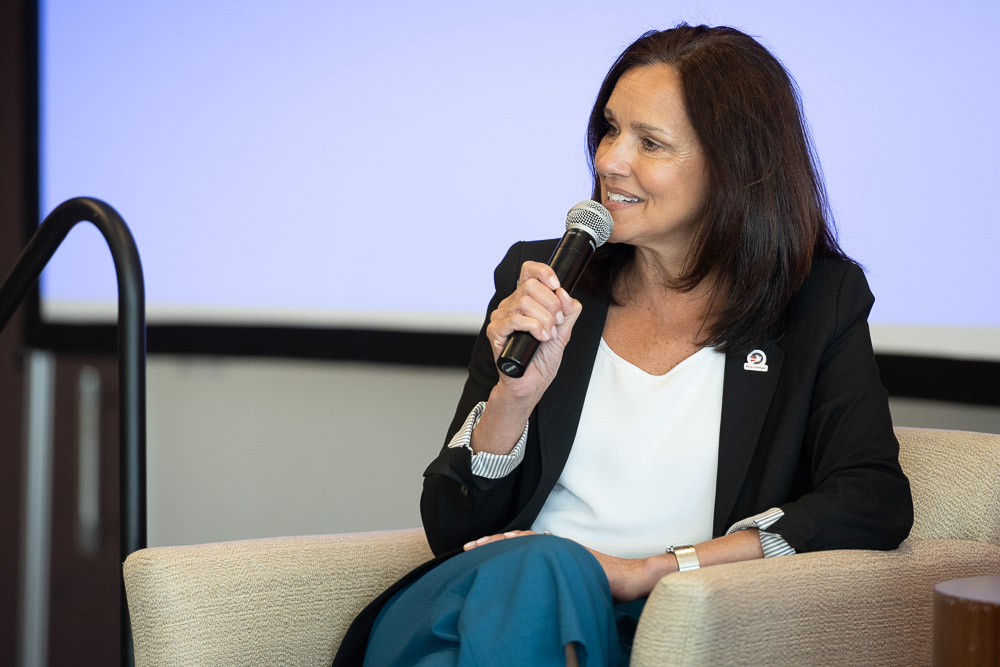
Hon. Carol Spahn, 21st Director, U.S. Peace Corps and Presidential Executive-in-Residence, CSU
Presenter
Carol Spahn, Former Peace Corps Director and Current Presidential Executive-in-Residence at CSU
Carol Spahn served as director of the Peace Corps from 2022 to 2025 and is currently presidential executive-in-residence at Colorado State University. She brings more than thirty years of leadership experience across government, nonprofit organizations, and the private sector. She has lived and worked in Malawi and Romania and led teams throughout Africa, Latin America, Eastern Europe, Asia, and the United States on issues ranging from small business development to infectious disease prevention and women’s empowerment.
Carol’s Peace Corps roots extend back to her service as a volunteer from 1994 to 1996 in Romania, where she served as a small business advisor. Before returning to the Peace Corps as country director, Carol was senior vice president of operations at Women for Women International, an organization serving marginalized and socially excluded women in conflict-affected countries. Prior to that, Carol served as executive director of Accordia Global Health Foundation, a nonprofit focused on creating sustainable centers of excellence in health in Africa. She served as vice president, chief financial officer, and treasurer of Small Enterprise Assistance Funds, a nonprofit private equity fund manager that invests in small and medium-sized companies in developing countries. She has also held positions at leading private sector institutions, including GE Capital and KPMG Peat Marwick.
Carol holds a bachelor’s degree from the Catholic University of America and a master’s degree in international development from the George Washington University Elliott School of International Affairs
Event Description
Reframing Development in the Digital Era: How Artificial Intelligence and Data Analytics Can Drive Transformation in Africa and the Caribbean Amid Shrinking Development Assistance
Low-income nations, particularly in Africa and the Caribbean, face a growing challenge: increased development needs (health, agriculture, climate, education, social protection) coupled with decreasing and fragmented international aid. This funding decline has stalled digital transformation efforts that were donor-dependent, making it difficult for governments and institutions to invest in digital infrastructure, talent, and public services.
To address this, policymakers and NGOs must optimize resources, improve service delivery, strengthen planning, boost domestic capacity, and attract performance-based financing. AI, advanced data analytics, and open-source technologies offer a cost-effective solution for accelerating digital transformation despite budget constraints, enhancing productivity, governance, and addressing inequalities. Sustainable progress requires innovative financing, regional collaboration, open-source adoption, and inclusive policies.
Ultimately, AI and data analytics present a critical opportunity for Africa and the Caribbean. By adopting smarter, leaner, and more collaborative digital strategies, these countries can build resilient systems and achieve sustainable development in a resource-constrained future.
Presenters
Adam Preston, Digital Transformation Specialist, Veterinary Health System, Colorado State University
Adam Preston has 20 years of experience in information and communication technologies consulting, software engineering, and international development on projects in the Philippines, Haiti, Ethiopia, Guinea, Tanzania and the West Bank.
Jhonson Charles, Global Expert in Project Management, Global Health, Health Information Systems (HIS), Monitoring & Evaluation (M&E), and Data Science
Jhonson Charles has over 18 years of experience leading digital transformation and strategic information initiatives in low-resource and complex environments. He has worked extensively across Africa, the Caribbean, and Latin America, and is co-founder of theCsion LLC.
Wednesday, March 4th
SCHEDULE OF EVENTS
Event Description
As global development moves beyond borders, the question becomes clear: how do we empower individuals to drive change from within? This session explores coaching as a powerful catalyst for entrepreneurship – cultivating resilience, innovation, and purpose in an evolving global landscape.
Grounded in entrepreneurial leadership, the session positions identity as a launchpad rather than a limitation. Participants will engage with practical coaching tools, including the Entrepreneurial Mindset Profile (EMP), CliftonStrengths, Ikigai, and culturally responsive design thinking to help leaders navigate uncertainty, reframe failure, and lead with values. Emphasis is placed on strengthening self-awareness as a pathway to systems-level impact.
Through guided reflection and applied strategies, participants will gain actionable approaches to empower local innovators, activate internal change agents, and strengthen entrepreneurial ecosystems across global contexts. Together, we’ll reimagine international development as collaboration rather than intervention—and explore how coaching can unlock the next generation of global changemakers.
Presenter
Lesley Robinson, Associate Director of the Institute for Entrepreneurship (I4E), Colorado State University, and Co-Founder of the ayana Foundation
Lesley Robinson is an entrepreneurial leadership educator and ecosystem builder passionate about transforming development through innovation, inclusion, and identity. She champions a “values-to-ventures” approach that empowers underrepresented founders globally. Her work bridges coaching, cultural competencies, and entrepreneurial mindset education to build resilient innovators and intrapreneurs who drive change from within. With experience spanning higher education, global development, and women’s entrepreneurship, Lesley designs programs that help individuals and communities flourish beyond aid—turning identity into a launchpad for global impact.
Event Description
President Eisenhower delivered his “Atoms for Peace” speech 72 years ago and ushered in an era of technology-driven soft power diplomacy, in which the U.S. helped lead the global development of nuclear energy. As we near the critical climate turning-point, and grapple with the realities of AI and its impacts, nuclear energy is again at the forefront of discussion. This panel will discuss why, and how, the U.S. should take a leading role in developing small modular reactors (SMRs) and other advanced nuclear energy technologies across the globe. Such a move would support developing nations, combat climate change, counter ascendant great powers, and restore our reputation and soft power capabilities. This session will discuss what SMRs are and how they can serve as a single point of success for multiple challenges.
Presenters
Vincent Paglioni, Assistant Professor of Systems Engineering, Colorado State University
Vincent Paglioni holds a B.S. in nuclear & radiological engineering from Georgia Tech University. Prior to joining CSU, he worked for the Department of Navy as a nuclear test engineer and then earned M.S. and Ph.D. degrees in reliability engineering from the University of Maryland. His research focuses on understanding and improving the risk, reliability, and resiliency characteristics of complex engineering systems, including nuclear power plants. He teaches courses on nuclear engineering and engineering risk assessment, and advocates for the deployment of nuclear energy in Colorado.
Thomas Johnson, Professor of Health Physics, Environmental and Radiological Health Sciences Department, Colorado State University
Thomas Johnson holds a B.S. in industrial technology from Southern Illinois University, an M.S. in environmental health engineering from Northwestern University, and a Ph.D. in health physics from Purdue University. His research focuses on the movement of radionuclides in the environment and laser safety. He is a certified health physicist with over 20 years of experience working with radiation, including aboard nuclear submarines for the U.S. Navy and at nuclear power plants.
Scott Bean, Senior Commercial Manager, NuScale Power
Scott Bean has over 10 years’ experience in nuclear power. Having received an M.A. in public and international affairs (University of Ottawa) and a B.A. in Russian studies and political science (Gustavus Adolphus College), Scott first entered the nuclear industry through his work as a translator and interpreter in Russia. Scott has extensive experience with and knowledge of Eastern European and Scandinavian nuclear companies, having worked, amongst other things, on the commercial development of a high-temperature pebble-bed reactor design for the European market. A near-native Russian speaker, Scott has spent years in Russia studying the country’s past and contemporary economic and political systems.
Event Description
The End of an Era? Rethinking Aid, Partnership, and Influence Beyond USAID
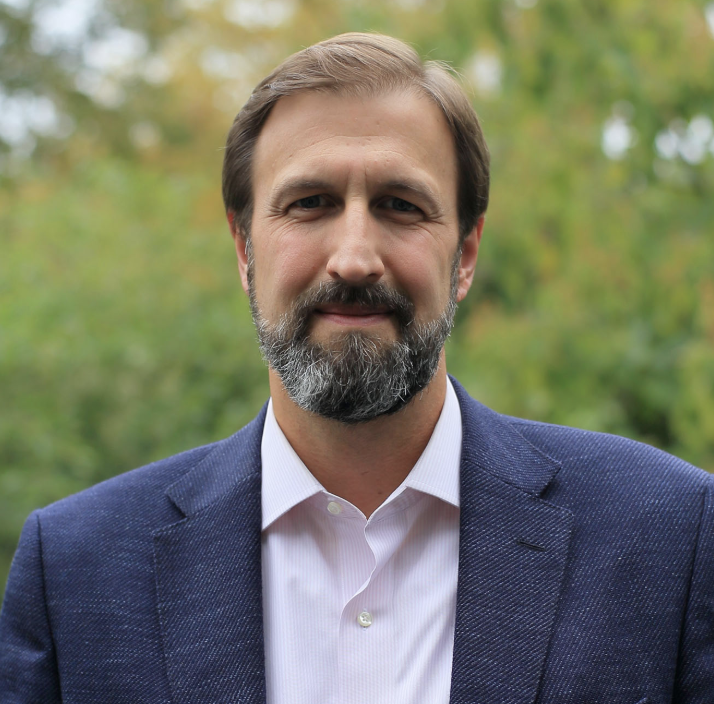
Jeremy Konyndyk, President of Refugees International
Presenter
Jeremy Konyndyk, President of Refugees International
Jeremy Konyndyk is president of Refugees International. A committed humanitarian advocate and seasoned emergency operator, he has served in senior appointments in two U.S. administrations and in a range of U.S. and overseas NGO leadership positions.
Prior to joining Refugees International, Jeremy served in the Biden administration as USAID’s lead official for COVID-19. He also served on the Biden-Harris transition teams for the Departments of State and Health and Human Services.
From 2013–2017, Jeremy served in the Obama administration as the director of USAID’s Office of U.S. Foreign Disaster Assistance (OFDA), where he led the U.S. government’s response to international disasters. He managed a large global team with annual resources of more than $1.4 billion, responding to the Ebola outbreak in West Africa, the 2016 Ethiopia drought, the conflict in Northern Nigeria, the Nepal earthquake, the Iraq crisis, Typhoon Haiyan in the Philippines, resurgent conflict in South Sudan, and the war in Syria, among other crises. He also led the Agency’s preparations for the 2016 World Humanitarian Summit.
Between his administration appointments, Jeremy worked from 2017–2020 as a senior policy fellow at the Center for Global Development, focusing on humanitarian response and pandemic preparedness research. He developed and led CGD’s “Rethinking Humanitarian Reform” initiative, exploring how the humanitarian system could meaningfully shift power and influence toward crisis-affected populations – and why it has traditionally failed in its commitments to do so.
Jeremy has worked extensively in the humanitarian NGO sector, serving as a country director in West Africa and East Africa with the American Refugee Committee (now Alight), and as a policy director in Washington, DC with Mercy Corps. He began his career in the Balkans, working on the response to the 1999 war in Kosovo. He also worked with the U.S. Department of State’s Bureau of Population, Refugees, and Migration.
He is currently a member of the World Health Organization’s high-level Independent Oversight and Advisory Committee, which oversees the agency’s Health Emergencies Programme and advises the WHO Director-General.
He lives in Takoma Park, Maryland with his wife, two sons, and dog, and enjoys baking, traveling, and triathlons.
Event Description
When People Move: AI Tools and Systems Thinking for Understanding Human Migration
Graduate students in Systems Engineering at Colorado State University will participate in a panel discussion moderated by Associate Professor Aaron Brown. The session will explore innovative tools being developed to forecast human migration patterns and their relevance to global development. Professor Brown will guide a conversation with the student researchers about their work and its implications for policy and planning. The discussion will highlight two complementary approaches—artificial intelligence (AI) and systems dynamics modeling—applied to regions in Africa and Central America. The AI framework identifies patterns and predicts movement trends, while systems dynamics uses causal loop analysis to examine how environmental, political, and social factors interact over time. Considering drivers such as climate stress, political stability, and food security, these models align with the UN Sustainable Development Goals. Together, they offer tools to assist policymakers and development organizations in planning resources and infrastructure to address migration in a post-USAID environment.
Presenters
Joshua Alormenu, Cybersecurity Architect and Doctoral Student in Systems Engineering, Colorado State University
Joshua Alormenu’s research integrates experimental and systems engineering methodologies to advance a data-driven understanding of climate-induced migration in Africa. His work synthesizes environmental drivers, system dynamics modeling, and Sustainable Development Goal (SDG) indicators to inform equitable, evidence-based policy interventions. By visualizing critical climate change variables across Africa, his research contributes to integrated frameworks for sustainability and resilience. Professionally, Joshua supports organizations in architecting secure network infrastructures that meet and exceed NIST, CMMC, and other advanced compliance standards, while leading collaborative initiatives in secure systems design.
Stefan Haugen, Research Chemist and M.S. Student in Systems Engineering, Colorado State University
At Golden, Colorado’s National Renewable Energy Lab, Stefan Haugen works in the Bioeconomy and Sustainable Transportation Center developing analytical chemistry methods and data pipelines to accelerate circular materials R&D. His thesis work designs an alert platform linking water–energy–food stressors to climate-driven migration using explainable data science and systems thinking. He’s focused on practical tools that turn complex data into decisions, and where resilient, low-waste solutions intersect from research efficiency to migration modeling.
Aaron Brown, Associate Professor of Systems Engineering, Colorado State University
Aaron Brown focuses on humanitarian engineering, global development systems, and sustainable systems. His work connects technology, education, appropriate technology and community resilience.
Stephen Leisz, Professor of Geography, Colorado State University
Stephen Leisz has worked in the broad area of international development since the mid-1980s, first in Africa with the Peace Corps and the Land Tenure Center, later in Central America with the Land Tenure Center, and most recently Southeast Asia with CARE International, NGIS, and the University of Copenhagen. He is currently a professor at CSU with continuing research in Southeast Asia. His work focuses on human livelihood systems, the drivers of changes in livelihood systems, and the impacts of changed systems on both the environment and on the human societies that rely on them.